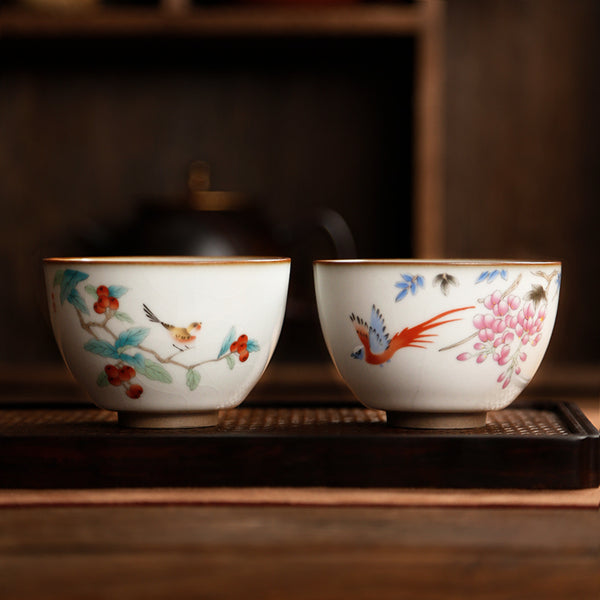

The Beauty Behind Chinese Tea Cup Shapes
Compartir
Chinese tea culture is filled with quiet details — the sound of water boiling, the fragrance rising from fresh leaves, and even the shape of the tea cup resting gently in your hands. In traditional Chinese tea drinking, the cup is never simply a container. Its form influences temperature, aroma, texture, and even the emotional atmosphere. Over centuries, different cup shapes evolved to complement various teas and drinking styles.
Small Tasting Cups — Delicate and Mindful
The most recognisable Chinese tea cups are the small tasting cups used in Gongfu tea ceremonies. These cups are intentionally tiny, usually holding only a few sips of tea. Their small size encourages slow drinking and appreciation of each infusion.

Wide-Rim Cups - Enhancing Aroma

Wide-rim tea cups are designed to release fragrance more easily. The open shape allows the tea aroma to spread upward, making them perfect for highly fragrant teas such as Tie Guan Yin or jasmine tea.

When holding a wide-rim cup, the drinker naturally brings the nose closer to the tea surface, creating a more immersive sensory experience. These cups often feel elegant and airy, adding softness to the tea ceremony.
Tea masters sometimes choose wide cups specifically when aroma is considered more important than heat retention.
Tall Aroma Cups — Capturing Fragrance

Before drinking, the empty tall cup is gently smelled. Its narrow shape traps the fragrance inside, allowing tea drinkers to experience layers of floral or roasted aromas lingering with the cup walls.
This practice transforms tea drinking into a deeply meditative ritual focused on scent as much as taste.
Thick Clay Cups — Warm and Earthy
Clay tea cups, especially those made from Yixing zisha clay, offer a completely different experience. Their thicker walls retain warmth longer and create a softer mouthfeel.
Many tea enthusiasts believe clay cups can subtly round and mellow stronger teas like aged pu-erh or roasted oolong. Over time, the porous clay absorbs tiny traces of tea oils, slowly developing a unique character through repeated use.
These cups often feel rustic, grounded, and deeply connected to nature.

Handleless Cups — Simplicity and Connection

Unlike Western teacups, many Chinese tea cups have no handles.
Holding the warm cup directly becomes part of the experience. The fingers sense the temperature, texture, and weight of the tea vessel.
This physical connection encourages mindfulness. The warmth of the tea feels immediate and intimate, reminding the drinker to slow down and stay present.
Simple handleless cups are often favoured in minimalist tea ceremonies where quiet elegance matters more than decoration.
Tea Cups as an Expression of Art and Philosophy
Chinese tea cups reflect more than practical design — they embody philosophy, aesthetics, and cultural values. A small cup teaches patience. A wide cup celebrates fragrance. A clay cup honours earth and craftsmanship.
Even today, modern tea lovers continue exploring how different cup shapes transform the same tea into completely different experiences. In Chinese tea culture, the cup becomes part of the conversation between water, leaf, and human spirit.
Perhaps that is why collecting tea cups becomes such a meaningful journey: each shape carries its own mood, rhythm, and story.
