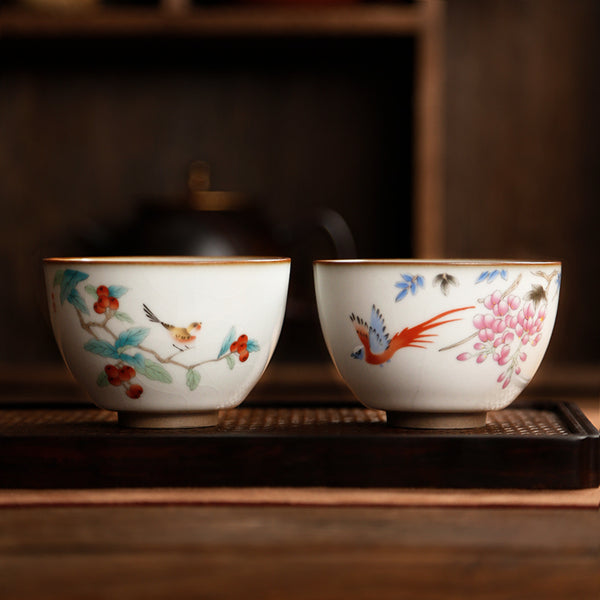

Jingdezhen: The Ancient Chinese City That Became the Porcelain Capital of the World
There are places in China where history can be seen in ancient temples, buildings and city walls. And then there is Jingdezhen (景德镇) — a city where history can be held in your hands.
For more than a thousand years, Jingdezhen has been at the heart of Chinese porcelain

production. Its kilns produced exquisite ceramics for emperors, scholars and families, while its porcelain travelled thousands of miles across Asia and eventually around the world.
Today, Jingdezhen is known as the “Porcelain Capital of China”, a title that reflects its extraordinary influence on the history of ceramics.
A city shaped by porcelain
Jingdezhen is located in Jiangxi Province in southeastern China. Its natural surroundings provided many of the ingredients needed for porcelain production, including kaolin clay and porcelain stone, while forests supplied fuel for the great kilns.
The town became particularly important during the Song Dynasty, when its delicate blue-and-white porcelain became highly prized. During the reign of Emperor Zhenzong, around the beginning of the 11th century, the town was renamed Jingdezhen, taking its name from the emperor's reign title.
From this point onwards, its reputation continued to grow.
The birthplace of beautiful porcelain
What made Jingdezhen special was not simply the availability of

good materials. Generations of craftsmen developed increasingly sophisticated techniques for preparing clay, shaping vessels, applying glazes and controlling the intense heat of the kilns.
The result was porcelain that could be remarkably thin, strong, smooth and almost translucent.
The development of blue-and-white porcelain became one of Jingdezhen's greatest achievements. Cobalt-blue decoration against a white porcelain background became instantly recognisable and eventually one of the most famous styles of Chinese ceramics.
The beauty of these pieces was matched by their technical complexity. Every vessel depended on the skill of the maker — and ultimately on the unpredictable power of fire.
Porcelain for emperors
During the Ming Dynasty, Jingdezhen became closely associated with the Imperial Court.
The Imperial Kilns produced porcelain specifically for the emperor and the imperial household, with highly refined shapes, colours and decoration. But Jingdezhen was much more than an imperial workshop.
A vast network of craftsmen, miners, painters, kiln workers and merchants developed around the ceramic industry. By the 16th century, historical records indicate that more than 100,000 people were involved in the city's porcelain industry.
Jingdezhen had effectively become a city built around ceramics.
From Jingdezhen to the world
Jingdezhen porcelain eventually travelled far beyond China.
Through land and maritime trade routes, Chinese ceramics reached markets across Asia,
the Middle East and Europe. European collectors became fascinated by Chinese porcelain, and its distinctive designs influenced ceramic makers around the world.
The influence was so profound that the English word “china” came to be associated with porcelain. Jingdezhen was no longer simply producing ceramics for China. Its craftsmanship was helping shape the world's appreciation of porcelain.
Jingdezhen today
Jingdezhen's story did not end with the ancient kilns.
Today, the city remains a major centre for ceramics, bringing together traditional craftsmen, contemporary artists and designers. Ancient techniques sit alongside modern ideas, while the city's long ceramic tradition continues to evolve.
In 2026, the Jingdezhen Handicraft Porcelain Industry Sites were inscribed on the UNESCO World Heritage List, recognising the city's exceptional technological, artistic and trading heritage.

Jingdezhen and the art of tea
For anyone who loves Chinese tea, Jingdezhen has a special significance.
Tea and ceramics have been connected in Chinese culture for centuries. A teapot or teacup is not simply a functional object — it can be part of the pleasure and ritual of drinking tea.
The feel of the porcelain in your hand, the smoothness of the glaze, the shape of the cup and the beauty of its decoration all contribute to the experience.
Earth, water, fire and human hands
Perhaps the most remarkable thing about Jingdezhen is that its story began with simple elements:
earth, water, fire and human hands.
From these came one of the world's great ceramic traditions.
For centuries, Jingdezhen's craftsmen transformed local materials into porcelain that travelled from imperial palaces to tea tables around the world.
And that tradition continues today. So the next time you hold a Chinese porcelain teacup or teapot, take a moment to appreciate it. Behind that beautiful piece may be centuries of knowledge, craftsmanship and culture — and a little of the spirit of Jingdezhen, China's ancient Porcelain Capital.
Discover Oriental ceramics at TPotsOriental
We are passionate about bringing the beauty and craftsmanship of Oriental ceramics into contemporary homes.
Explore our collection of Chinese-inspired teapots, teacups and ceramic pieces, and bring a little of this remarkable tradition to your own tea table.